
Are Airbnbs Profitable? Costs, Earnings & ROI Guide
Investing in an Airbnb property sounds like an easy way to earn passive income, but hidden expenses, seasonal demand, and low occupancy rates can quickly eat into profits. So, are Airbnbs profitable, or do the costs outweigh the potential earnings? This article explores Airbnb profitability by examining potential rental income, operating expenses, occupancy rates, and seasonal demand. Readers will learn how to calculate Airbnb profits, maximize rental income, minimize expenses, and determine whether investing in an Airbnb property is a worthwhile financial decision.
This article will explore whether Airbnb is a profitable investment by examining potential rental income, startup costs, operating expenses, occupancy rates, and seasonal demand. It will also explain how hosts can calculate profitability, maximize rental earnings, minimize expenses, and determine whether starting an Airbnb business is financially worthwhile.
1. Understanding Airbnb Profitability: The Basics
Airbnb has created opportunities for property owners and rental operators to generate income through short-term vacation rentals. However, running a successful rental business involves more than listing a property and waiting for reservations. Hosts must understand how revenue, operating costs, occupancy, and pricing work together to determine profitability.
What Does Airbnb Profitability Mean?
Airbnb profitability refers to the amount of money a host retains after covering the expenses associated with operating a short-term rental property. Gross revenue represents the total income generated through guest bookings, while net profit is the amount remaining after operating expenses are deducted.
For example, a property generating $3,000 in monthly booking revenue may appear financially attractive. However, expenses such as rent, cleaning, utilities, maintenance, and platform fees can significantly reduce the actual earnings.
Understanding the difference between revenue and profit helps investors make more realistic financial decisions.
Is Airbnb Profitable for Hosts?
Airbnb can be profitable for hosts, but the results depend on the property’s location, rental demand, pricing strategy, and operating expenses.
Property owners may benefit from having greater control over their investment because they do not necessarily have monthly lease payments. However, they still need to account for mortgage payments, property taxes, insurance, maintenance, and other ownership costs.
Rental operators who lease properties face additional financial responsibilities. Their business model depends on generating enough short-term rental revenue to cover monthly rent and other expenses.
Ultimately, profitability comes from maintaining a healthy balance between booking revenue and operating costs.
How Does the Airbnb Business Model Work?
The Airbnb business model connects property owners and rental operators with travelers looking for short-term accommodation. Hosts create property listings, set nightly rates, manage reservations, and provide accommodation services. Guests browse available properties and pay for their stays through the platform.
Hosts generally generate revenue through:
- Nightly accommodation charges.
- Additional guest-related fees.
- Optional services, where applicable.
- Extended bookings and repeat reservations.
Airbnb facilitates the booking process and charges applicable platform service fees. These fees should be included when calculating the actual income received by hosts.
2. Are Airbnbs Profitable? Factors That Affect Earnings
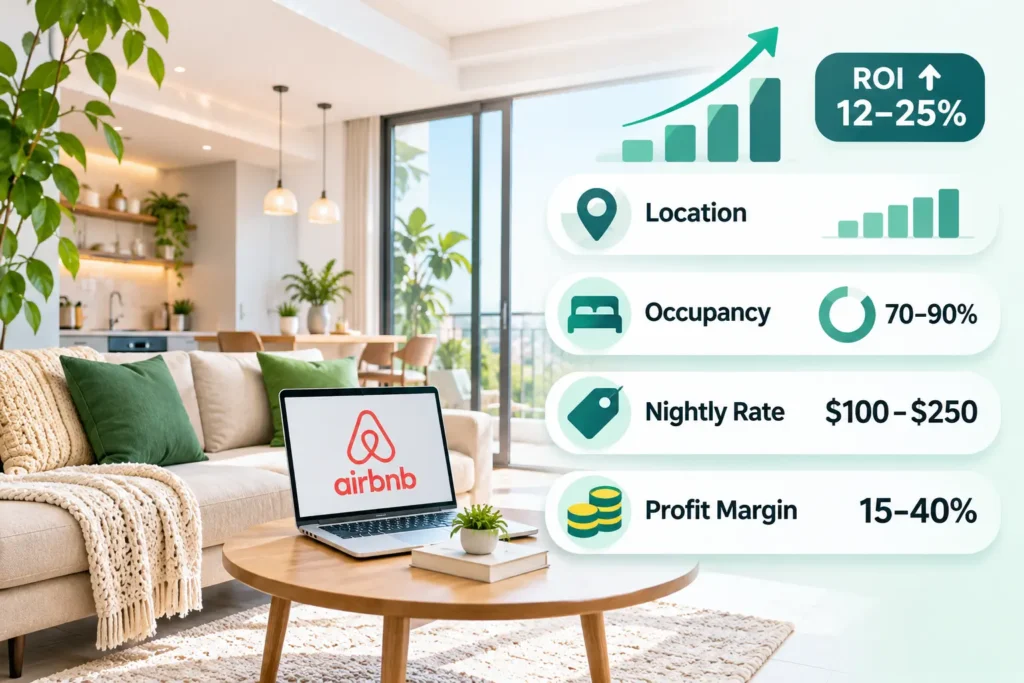
Whether a rental property generates positive returns depends on several financial and operational factors. Even properties in popular destinations can experience poor financial performance when expenses are high or booking demand is inconsistent.
Location and Rental Demand
Location is one of the most important factors influencing short-term rental performance. Properties near tourist attractions, beaches, business districts, universities, and transportation facilities may attract more potential guests.
However, high demand does not automatically guarantee profitability. Hosts should also consider competition, local accommodation prices, seasonal trends, and regulations affecting short-term rentals.
Average Nightly Rate (ADR)
The average daily rate (ADR) represents the average amount earned for each booked night. Properties with attractive interiors, convenient amenities, and desirable locations may support higher nightly prices. Hosts can adjust their rates according to local demand, holidays, special events, and competitor pricing.
Occupancy Rate and Seasonal Demand
Occupancy rate measures the percentage of available nights booked by guests. A property with a higher occupancy rate generally has more opportunities to generate revenue. However, increasing bookings through excessive discounts may reduce the overall profit margin.
Seasonal demand also plays an important role. Vacation destinations may experience strong bookings during holidays and summer months but lower demand during quieter periods. Hosts should prepare financial projections that account for both busy and slow seasons.
Operating Expenses and Profit Margins
Operating expenses directly affect how much money remains after generating booking revenue. Common expenses include:
- Monthly rent or mortgage payments.
- Cleaning and turnover costs.
- Utilities and internet.
- Property maintenance and repairs.
- Insurance and applicable taxes.
- Airbnb platform fees.
- Property management expenses.
A property generating substantial gross revenue may still have a low profit margin if its operating expenses are too high.
3. How Much Do Airbnb Hosts Make on Average Per Month?
The monthly earnings of Airbnb hosts vary depending on property location, size, nightly rates, occupancy, and operating costs. There is no single average that accurately represents every rental market. A one-bedroom apartment in a busy tourist destination may generate different revenue from a large vacation home in a less frequently visited location.
Average Monthly Rental Revenue
Monthly rental revenue depends primarily on the average nightly rate and the number of booked nights. For example, consider a property with an average nightly rate of $120 and 20 booked nights during a month. Its estimated gross revenue would be:
$120 × 20 = $2,400 per month.
This figure represents booking revenue before operating expenses. It does not represent the host’s actual take-home profit.
Gross Revenue vs. Net Profit
Understanding the difference between gross revenue and net profit is essential when evaluating rental earnings. Gross revenue represents the total income generated before expenses.
Net profit represents the amount remaining after applicable operating expenses have been deducted. For example, if a property generates $2,400 in monthly revenue and incurs $1,800 in operating expenses, the remaining monthly operating profit is $600.
Factors That Influence Monthly Earnings
Several factors can influence how much a host earns:
- Property size and available amenities.
- Local competition and rental demand.
- Average nightly pricing.
- Seasonal occupancy fluctuations.
- Guest reviews and listing quality.
- Cleaning and management expenses.
Hosts should evaluate these factors before estimating monthly earnings or committing to a new investment.
4. Airbnb Startup Cost: How Much Does It Cost to Get Started?
Understanding the Airbnb startup cost helps investors determine how much money they need before accepting their first reservation. The initial investment depends on whether someone owns an existing property, purchases a new one, or leases a property for short-term rental operations.
Property Purchase or Lease Costs
Property owners may need to consider the down payment, closing costs, financing expenses, and initial renovations. Rental arbitrage operators generally need to account for:
- First month’s rent.
- Security deposit.
- Lease-related fees.
- Initial utility payments.
- Any approved setup or renovation expenses.
Before launching a rental business, investors can use the Startup Cost Calculator to estimate deposits, furnishing expenses, permits, initial setup costs, and emergency reserves.
Furnishing and Preparation Expenses
A comfortable rental property requires furniture, appliances, and essential household items. Typical furnishing cost categories include:
- Beds and mattresses.
- Sofas and dining tables.
- Kitchen appliances and utensils.
- Bedding and towels.
- Lighting and decorative accessories.
- Smart locks and security equipment.
The overall investment depends on property size, design preferences, and the quality of selected furnishings.
Cleaning, Maintenance, and Utility Costs
Before welcoming guests, properties need professional cleaning and basic preparation. Hosts should also budget for recurring cleaning services, laundry, internet, electricity, water, heating, and cooling. Preventive maintenance is particularly important because unexpected repairs can affect both guest satisfaction and monthly profitability.
Security Deposits and Emergency Reserves
A financial reserve helps cover unexpected repairs, vacancies, and other operational problems. Hosts should maintain sufficient reserves to handle slower booking periods without relying entirely on future reservations to pay current expenses. They should also understand the difference between refundable security deposits, where applicable, and non-refundable business expenses.
5. How to Calculate Airbnb Profitability
A proper financial calculation helps investors understand whether a property can generate positive cash flow. Rather than focusing only on gross revenue, hosts should account for all initial and recurring expenses. Hosts considering rental arbitrage can use this Rental Arbitrage Calculator to estimate monthly profit, startup cash requirements, and potential returns before signing a lease.
Calculating Monthly Gross Revenue
Gross revenue represents the total booking income generated during a particular period. The basic formula is:
Monthly Gross Revenue = Average Nightly Rate × Number of Booked Nights
For example:
- Average nightly rate: $120.
- Booked nights: 20.
- Monthly gross revenue: $2,400.
This calculation provides an initial estimate of the property’s earning potential.
Calculating Operating Expenses
Operating expenses represent the costs associated with running the rental property. These may include:
- Rent or mortgage payments.
- Cleaning fees and turnover expenses.
- Utilities and internet.
- Maintenance and repairs.
- Platform service fees.
- Insurance and property management.
Hosts should also consider applicable taxes and other location-specific expenses.
For guidance on rental income and deductible expenses in the United States, property owners can consult the IRS Rental Income and Expenses Guide. Tax treatment varies by country, so investors should also check their local tax requirements.
Calculating Net Profit and Profit Margin
Net profit represents the revenue remaining after the relevant expenses are deducted.
Net Profit = Gross Revenue − Total Expenses
Consider this example:
| Financial metric | Amount |
|---|---|
| Monthly gross revenue | $2,400 |
| Monthly operating expenses | $1,800 |
| Monthly net operating profit | $600 |
The profit margin shows how much of the gross revenue remains as profit.
Profit Margin = (Net Profit ÷ Gross Revenue) × 100
Using the example:
($600 ÷ $2,400) × 100 = 25%
This means the property retains 25% of its gross revenue as operating profit.
This simplified calculation assumes all relevant monthly expenses are included. Financing, income taxes, depreciation, and other accounting adjustments may change the final investment return.
Understanding Break-Even Occupancy
Break-even occupancy represents the minimum number or percentage of available nights required to cover the property’s expenses. For a simplified example, assume:
- Monthly fixed expenses: $1,800.
- Average nightly rate: $120.
- Available nights: 30.
The property needs 15 booked nights to generate $1,800 in gross revenue. That represents a 50% occupancy rate.
However, this simplified example excludes variable costs, platform fees, and other expenses that may increase the actual break-even occupancy requirement. Understanding this figure helps hosts establish realistic booking targets and evaluate financial risks.
To determine how many nights a property needs to be booked to cover its expenses, hosts can use this Break-Even Occupancy Calculator and compare their expected occupancy with the break-even point.
6. Key Airbnb Financial Metrics Every Investor Should Know
Investors use several financial metrics to evaluate short-term rental performance. These measurements provide a clearer understanding of pricing, occupancy, revenue, and investment returns.
Average Daily Rate (ADR)
ADR measures the average accommodation revenue earned per booked night.
Hosts can use the Airbnb Nightly Rate Calculator to estimate the nightly price needed to cover operating expenses and achieve their desired monthly profit.
ADR = Room Revenue ÷ Number of Booked Nights
A higher ADR may indicate stronger pricing performance, although it should be evaluated alongside occupancy and operating costs.
Occupancy Rate
Occupancy rate measures the percentage of available nights booked by guests.
Occupancy Rate = (Booked Nights ÷ Available Nights) × 100
For example, if a property is available for 30 nights and receives bookings for 21 nights, its occupancy rate is 70%.
Revenue Per Available Night (RevPAR)
RevPAR measures accommodation revenue generated per available rental night, including unbooked nights.
RevPAR = ADR × Occupancy Rate
For example, an ADR of $120 and an occupancy rate of 70% produce a RevPAR of $84. This metric helps investors compare the combined effect of nightly pricing and occupancy.
Revenue Per Available Night (RevPAN)
RevPAN is another performance measurement used to assess revenue against available rental nights. For a single rental unit, it can be calculated by dividing accommodation revenue by the total available nights. Its exact definition may vary between reporting systems, so investors should use a consistent calculation when comparing properties.
Average Gross Yield: What Does It Mean?
The average gross yield Airbnb meaning refers to the relationship between annual gross rental revenue and the property’s purchase price or value, expressed as a percentage. Gross yield provides a quick way to compare the revenue potential of different investment properties before deducting operating expenses.
Gross Yield = (Annual Gross Rental Revenue ÷ Property Purchase Price) × 100
For example:
- Annual gross rental revenue: $24,000.
- Property purchase price: $300,000.
- Gross rental yield: 8%.
However, gross yield does not represent actual profit because it excludes expenses such as maintenance, cleaning, insurance, utilities, taxes, and property management.
Return on Investment (ROI) and Cash-on-Cash Return
Return on investment (ROI) measures the financial return generated compared with the total investment.
ROI = (Annual Net Return ÷ Total Investment) × 100
Cash-on-cash return measures the annual pre-tax cash flow compared with the actual cash invested in the property.
Cash-on-Cash Return = (Annual Pre-Tax Cash Flow ÷ Total Cash Invested) × 100
These metrics help investors understand whether a rental property is generating a reasonable return compared with the money committed to the investment.
7. How to Make Money With Airbnb Without Owning Property
Property ownership is not the only way to participate in the short-term rental business. Several business models allow individuals to generate income through Airbnb without purchasing real estate.
Airbnb Rental Arbitrage
Rental arbitrage involves leasing a property from a landlord and operating it as a short-term rental with the owner’s written permission. The operator pays monthly rent and earns revenue through guest bookings.
The lease cost vs. short-term revenue spread determines whether this model can generate positive cash flow.
For example, if a property generates $3,000 in monthly booking revenue but requires $1,500 in rent and $1,000 in other operating expenses, the remaining operating profit is $500.
However, this business model carries risks. Operators must verify local regulations, building policies, insurance requirements, and lease restrictions before hosting guests.
Airbnb explains some of these considerations in its official hosting regulations guide.
Airbnb Co-Hosting
Co-hosting allows individuals to manage rental properties on behalf of property owners. Responsibilities may include:
- Creating and optimizing property listings.
- Managing guest communication.
- Coordinating check-ins and check-outs.
- Organizing cleaning services.
- Handling reservations.
- Responding to guest concerns.
Co-hosts generally receive an agreed management fee or percentage of booking revenue. This approach allows individuals to participate in the rental business without purchasing or leasing an entire property.
Short-Term Rental Property Management
Property management is another business model for individuals interested in generating income without owning real estate. Managers handle daily operations, guest services, maintenance coordination, and reservation management for property owners. With reliable systems and operational support, a management business can expand by handling multiple rental units.
8. Real-World Airbnb Profitability Example
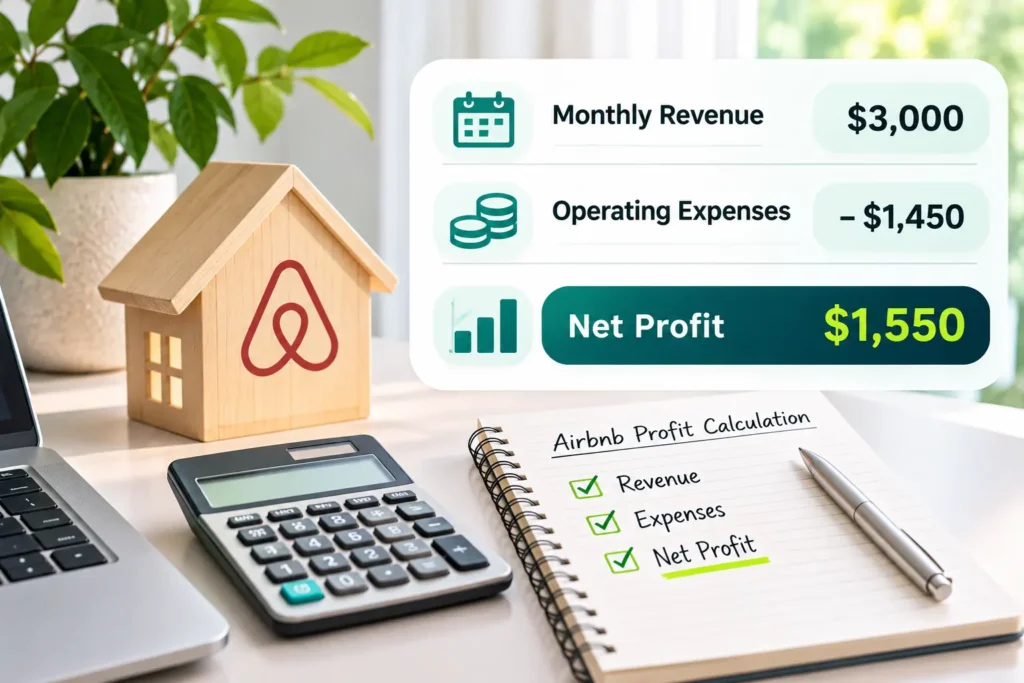
A practical financial example makes it easier to understand how booking revenue, operating expenses, and occupancy influence profitability. Consider a hypothetical one-bedroom apartment operated as a short-term rental. Assume the property has an average nightly rate of $120 and receives 20 booked nights during a 30-day month.
Monthly Revenue and Expense Breakdown
| Financial category | Monthly amount |
|---|---|
| Average nightly rate | $120 |
| Booked nights | 20 |
| Gross booking revenue | $2,400 |
| Monthly rent | $1,000 |
| Cleaning and turnover | $250 |
| Utilities and internet | $150 |
| Platform fees (illustrative) | $372 |
| Maintenance reserve | $28 |
| Total expenses | $1,800 |
| Net operating profit | $600 |
The platform fee above is an illustrative 15.5% assumption, not a universal rate. Airbnb’s fee structure varies by host and listing circumstances. Its official service fee guidance explains the applicable structures and how fees affect host payouts.
Calculating Actual Monthly Net Profit
Based on the example:
- Gross booking revenue: $2,400.
- Total operating expenses: $1,800.
- Monthly net operating profit: $600.
- Operating profit margin: 25%.
The property generates positive operating cash flow before income taxes and any additional financing or capital costs not included in the example.
How Occupancy Changes Profitability
Occupancy can significantly affect the financial performance of a rental property. Assuming the same $120 nightly rate:
| Booked nights | Gross monthly revenue |
|---|---|
| 10 nights | $1,200 |
| 15 nights | $1,800 |
| 20 nights | $2,400 |
| 25 nights | $3,000 |
As bookings increase, gross revenue generally increases. However, additional reservations may also increase cleaning, turnover, and other variable expenses. This is why investors should evaluate net profit rather than relying exclusively on occupancy or gross revenue.
9. Common Expenses That Reduce Airbnb Profits
Even properties with strong booking demand can experience poor financial performance when operating expenses are not managed properly.
Airbnb Platform Fees
Booking platforms charge service fees that affect the amount hosts receive from reservations.
Airbnb has different fee structures, and its published guidance explains that most hosts using the single-fee structure pay a 15.5% service fee, although exceptions apply.
Hosts should check their actual payout breakdown rather than assuming one percentage applies to every listing.
Cleaning and Turnover Costs
Each guest departure may require cleaning, laundry, restocking, and property inspection. Frequent guest turnover can increase expenses, particularly when cleaning services are outsourced.
Maintenance and Repairs
Regular maintenance helps keep the property comfortable and reduces the likelihood of negative guest experiences. Unexpected repairs involving appliances, plumbing, furniture, or electrical systems can create additional financial pressure.
Insurance, Taxes, and Other Expenses
Property insurance, applicable rental taxes, business registration, and licensing fees may also affect profitability. Requirements differ between locations. Airbnb provides an overview of legal and regulatory issues hosts should consider.
Hosts should also check whether their existing insurance policies cover short-term rental activities.
10. How to Improve Airbnb Profitability
Improving rental performance requires a combination of pricing, property management, and cost control.
Optimize Nightly Pricing
Hosts should review local competition, seasonal demand, and special events when setting nightly rates. Dynamic pricing can help adjust rental prices according to market conditions rather than keeping the same rate throughout the year.
Increase Occupancy Rates
Competitive pricing, attractive property photographs, accurate descriptions, and convenient booking policies can help attract reservations. Hosts should also focus on maintaining positive guest reviews because the overall guest experience influences listing appeal.
Reduce Operating Expenses
Regular expense monitoring helps identify opportunities to improve financial efficiency. Hosts can compare cleaning providers, monitor utility consumption, schedule preventive maintenance, and avoid unnecessary furnishing expenses. However, reducing costs should not compromise property quality or guest comfort.
Improve Guest Experience and Reviews
Clean accommodation, responsive communication, clear check-in instructions, and reliable amenities contribute to a better guest experience. Positive reviews can strengthen listing credibility and encourage future bookings.
11. Is Airbnb a Worthwhile Investment?
Airbnb can be a worthwhile investment when the property’s expected rental revenue justifies the initial investment and ongoing expenses. However, not every property is suitable for short-term rentals.
Pros and Cons of Investing in Airbnb
Potential advantages:
- Flexible nightly pricing.
- Opportunities to generate short-term rental income.
- Potential for higher revenue than traditional renting in some markets.
- Multiple business models, including co-hosting and rental arbitrage.
- Opportunities to manage multiple properties.
Potential disadvantages:
- High startup and furnishing costs.
- Seasonal fluctuations in booking demand.
- Frequent cleaning and maintenance requirements.
- Regulatory and licensing restrictions.
- Unpredictable monthly income.
- Platform fees and operational responsibilities.
When an Airbnb Property May Not Be Profitable
An Airbnb property may struggle financially when rental demand is weak, operating expenses are excessive, or the local market is highly competitive. Properties with expensive leases and consistently low occupancy rates may fail to generate enough revenue to cover monthly expenses.
Similarly, investors who underestimate furnishing costs, maintenance, or seasonal vacancies may experience lower returns than expected. A realistic financial projection should always be completed before committing to a property.
13. Final Verdict: Are Airbnbs Profitable?
Airbnbs can be profitable, but success depends on more than simply owning or listing a rental property. Location, occupancy rates, nightly pricing, startup costs, and ongoing operating expenses all influence the final return. Properties with consistent booking demand and well-managed expenses have a better opportunity to generate positive cash flow.
For potential investors, the key is to calculate the numbers before making a commitment. Comparing expected rental revenue with lease payments, furnishing costs, cleaning fees, maintenance, and other expenses can reveal whether a property is financially worthwhile.
Those who do not own property can also explore rental arbitrage, co-hosting, and property management, provided they have the necessary permissions and meet local requirements.
Ultimately, are airbnbs profitable? They can be, when the business model, property location, and financial planning work together. A realistic profitability calculation is the best starting point for deciding whether an Airbnb investment is the right opportunity.
Also Check:
What Is Rental Arbitrage? How It Works, Risks and the Math
How to Start Rental Arbitrage: A Step-by-Step Guide
Frequently Asked Questions
- Are Airbnbs Profitable for Beginners?
- Airbnb can be profitable for beginners, but success requires market research, realistic budgeting, and effective property management. Starting with a manageable property and understanding local demand can help reduce financial risks.
- Can Someone Make Money With Airbnb Without Owning Property?
- Yes. Rental arbitrage, co-hosting, and short-term rental property management allow individuals to participate without purchasing real estate. However, rental arbitrage requires appropriate landlord permission and compliance with local rules.
- How Many Nights Does an Airbnb Need to Be Booked to Break Even?
- The required number of booked nights depends on fixed expenses, variable costs, and the average nightly rate. Hosts can estimate break-even occupancy by comparing monthly operating costs with expected revenue per booked night.
- Is Airbnb More Profitable Than Traditional Renting?
- It depends on the property and local rental market. Short-term rentals may generate higher gross revenue in certain locations, but they also involve additional cleaning, maintenance, management, and platform expenses. Traditional renting may provide more predictable monthly income with fewer operational responsibilities.