
Rental Arbitrage Contract: Best Guide for 2026
A rental arbitrage contract can make the difference between a well-planned rental business and an expensive mistake. An operator might find a promising property, furnish it, and prepare to welcome guests, only to discover that the landlord or local regulations prohibit short-term rentals.
The process should begin before signing a lease. The property owner needs to understand the proposed business, the appropriate lease structure must be selected, and the agreement must clearly authorize the intended use. This guide explains how to pitch landlords, compare lease structures, identify essential clauses, prepare an addendum, and check legal and financial requirements before committing money.
1. How to Pitch Rental Arbitrage to a Landlord
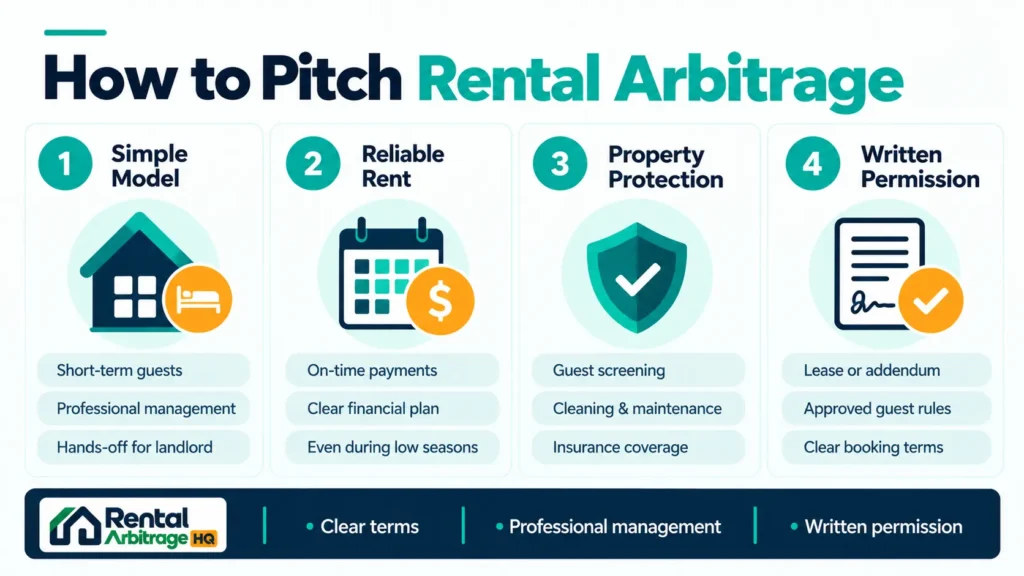
A successful landlord pitch focuses on the property owner’s priorities rather than simply promising higher rental income. Owners may worry about property damage, noise complaints, unreliable payments, insurance coverage, and excessive wear. A professional proposal should address these concerns with specific operating procedures.
The operator can explain that the arrangement involves paying agreed rent while managing permitted guest stays, cleaning, furnishing, and property maintenance. Depending on the business model, guests may include short-term travelers or corporate housing guests.
Guaranteed rent should only be promised when the operator has sufficient reserves to meet the obligation during periods of low occupancy.
Landlord Pitch Script
The following example script provides a starting point for approaching a property owner.
“Hello [Landlord Name], I’m interested in leasing your property at [Property Address]. I operate a short-term rental business that focuses on [Target Guest Type]. My proposal is to pay [Monthly Rent] under an agreed lease while professionally managing authorized guest stays, cleaning, and routine property care.
I understand that protecting the property and maintaining reliable payments are important. I can explain my guest policies, insurance arrangements, maintenance procedures, and financial preparation before any agreement is signed. I would also like to discuss written permission for the intended use and any building or local requirements. Would you be open to reviewing a detailed proposal?”
The script should be customized to reflect the actual business. It should not imply that legal approval, insurance coverage, or guaranteed income has already been established.
How to Address Common Landlord Objections
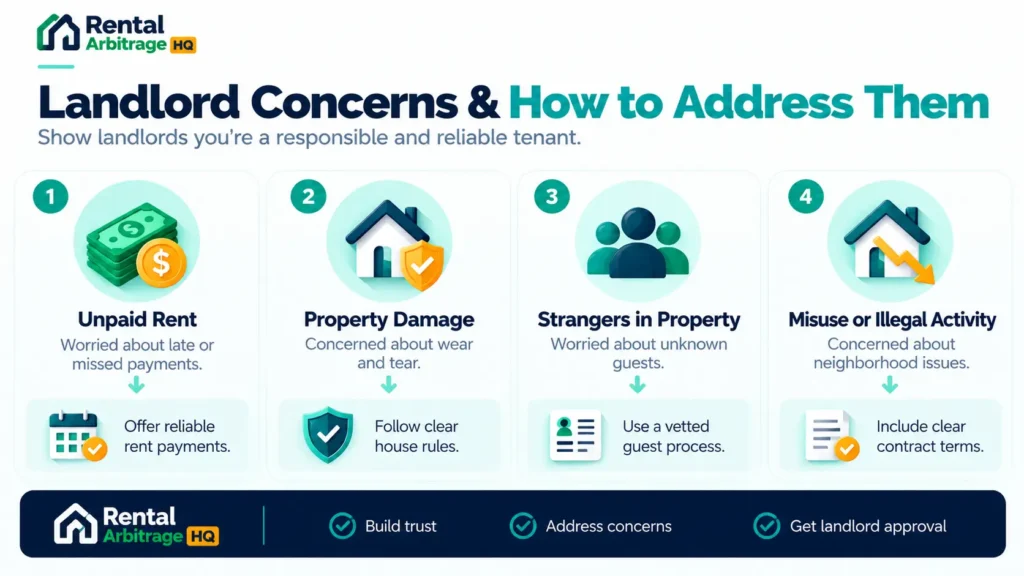
- Property damage: Explain inspection procedures, guest rules, maintenance arrangements, and appropriate insurance.
- Late rent: Present a realistic budget and explain how rent will be paid when bookings are low.
- Noise and complaints: Describe occupancy limits, quiet hours, guest policies, and complaint procedures.
- Excessive wear: Explain furnishing standards, cleaning services, and regular property inspections.
- Uncertainty about the business: Provide a written proposal describing responsibilities and the intended rental activity.
Before the first meeting, the operator should prepare financial projections, identify relevant local requirements, and determine which lease terms need the landlord’s approval.
2. Choose the Right Lease Structure
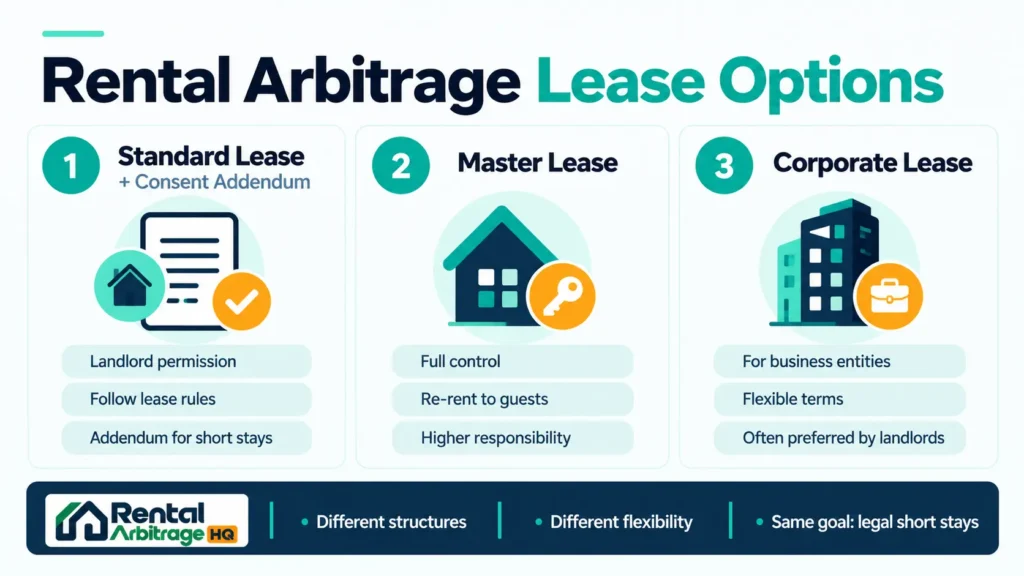
Once the landlord expresses interest, the next step is deciding how the arrangement will be documented. The title of the agreement matters less than the rights and responsibilities stated in its provisions.
A conventional residential lease may prohibit subletting or restrict the property to personal residential use. Additional written consent may therefore be necessary. The applicable rules depend on the property location and the existing agreement.
| Lease structure | Who is the tenant? | Liability and guest control | Important consideration |
|---|---|---|---|
| Standard lease with consent addendum | The individual or business named in the lease | The tenant operates within the agreed authorization | Conflicting lease restrictions must be addressed |
| Master lease | The operator or business named in the master lease | The operator receives the rights specifically granted by the agreement | Longer commitments may increase financial exposure |
| Corporate lease | A company or other business entity | The company is the named tenant, subject to the contract | A personal guarantee may still create individual liability |
Standard Lease With a Consent Addendum
This arrangement uses a conventional lease alongside written permission for the intended short-term rental activity. It may suit a property owner who prefers a familiar lease structure but agrees to specific exceptions.
The addendum should identify the underlying lease and clearly explain which restrictions are being changed. A general statement permitting occupancy may not adequately authorize short-term guest stays.
Master Lease
A master lease establishes the operator’s rights and obligations directly with the property owner. It may expressly permit the operator to sublet the property under defined conditions.
This structure can offer operational flexibility, but it may also create substantial financial commitments. The operator should review the duration, rent obligations, maintenance duties, and termination provisions before signing.
Corporate Lease
A corporate lease names a business entity as the tenant. This may help organize business operations, but it does not automatically eliminate personal liability. A personal guarantee, for example, may make an individual responsible for specified obligations if the business fails to meet them.
Some Airbnb-friendly buildings offer approved hosting arrangements, but building policies may restrict eligible units, guest numbers, or rental periods. Such approval should not replace a review of the actual lease and local requirements.
3. Essential Clauses in a Rental Arbitrage Contract
The agreement must translate the proposed business arrangement into clear contractual terms. It should establish the authorized property use, financial obligations, operating boundaries, and procedures for handling problems.
Subletting Permission and Use Clause
The sublet clause should explicitly address whether the operator may accommodate paying guests for short stays. The use clause should identify the permitted activity, including advertising the property and furnishing it for authorized guests.
An assignment clause is different from a subletting clause. Assignment generally concerns transferring a tenant’s contractual interest, while subletting involves granting another party the right to occupy all or part of the property. The legal distinction and applicable consent requirements depend on the agreement and jurisdiction.
Occupancy Limits and Guest Policy
The agreement should establish the maximum occupancy, guest policy, quiet hours, and restrictions on parties or disruptive activities. Guest screening should comply with applicable privacy, housing, and discrimination laws.
It should also explain how complaints will be reported and how the operator will respond to urgent problems.
Rent, Deposits, and Payment Terms
The agreement should specify monthly rent, payment deadlines, accepted payment methods, security deposits, and any legally permitted fees. It should identify responsibility for utilities, cleaning, supplies, and other operating costs.
The operator should account for vacancy risk because rent may remain due even when bookings generate little or no revenue.
Cleaning, Maintenance, and Alterations
The agreement should explain who handles routine cleaning, repairs, emergency maintenance, and guest-related damage. It should also state whether furnishing changes, smart locks, or other alterations require prior approval.
A property condition report, dated photographs, and a furniture inventory can help prevent disputes about the property’s original condition.
Insurance, Liability, and Personal Guarantees
The parties should confirm the insurance required for the intended activity and whether the relevant policies cover short-term rental operations. Standard residential coverage may not cover every commercial hosting activity.
Liability provisions should identify the responsibilities each party accepts. Any indemnification clause or personal guarantee deserves careful review because it may affect who bears financial losses after a dispute or claim.
Term, Renewal, Termination, and Exit
The agreement should establish its duration, renewal process, required notices, and grounds for termination. It should explain what happens if the operator breaches the agreement or a change in local regulations makes the planned activity unlawful.
An exit clause may address prepaid rent, deposits, furnishings, outstanding guest bookings, and other commitments when the arrangement ends. These provisions must remain consistent with applicable law.
4. Rental Arbitrage Lease Agreement: Addendum Term Sheet
Before preparing the final legal document, the operator and landlord can use a term sheet to record the commercial points they have discussed. This planning tool is not a substitute for a signed agreement.
Sublease Addendum Term Sheet
The following fields help organize the information needed for a tailored addendum.
- Property address: [Full address]
- Landlord or property owner: [Legal name]
- Tenant or operator: [Individual or business legal name]
- Underlying lease date: [Date or reference]
- Authorized use: [Short-term stays, whole-property sublease, or room-by-room sublease]
- Approved booking platforms: [List permitted platforms]
- Monthly rent and payment date: [Agreed terms]
- Security deposit: [Amount and applicable conditions]
- Occupancy and guest rules: [Maximum occupancy, minimum stay, and noise policy]
- Insurance requirements: [Required coverage and evidence]
- Maintenance responsibilities: [Owner’s and operator’s obligations]
- Alterations and furnishings: [Permitted changes and approval process]
- Term and renewal: [Duration and renewal conditions]
- Termination and exit: [Notice, breach procedures, and treatment of bookings]
- Required permits and approvals: [Applicable requirements and responsible party]
Select the Appropriate Schedule
A written addendum may use schedules to define the permitted activity.
- Schedule A: Short-term stays — defines authorized guest stays, booking platforms, occupancy limits, and applicable night restrictions.
- Schedule B: Whole-property sublease — describes the conditions under which the entire property may be sublet for an authorized arrangement.
- Schedule C: Room-by-room sublease — specifies permitted room rentals, shared-space rules, and occupant responsibilities.
Only schedules that accurately describe the intended activity should be included. The term sheet should also be checked against the underlying lease to avoid conflicting provisions.
Once the parties agree on the terms, the final document should be prepared or reviewed as appropriate, signed by the relevant parties, and retained with the original lease and supporting approvals.
5. Before-You-Sign Legality Checker
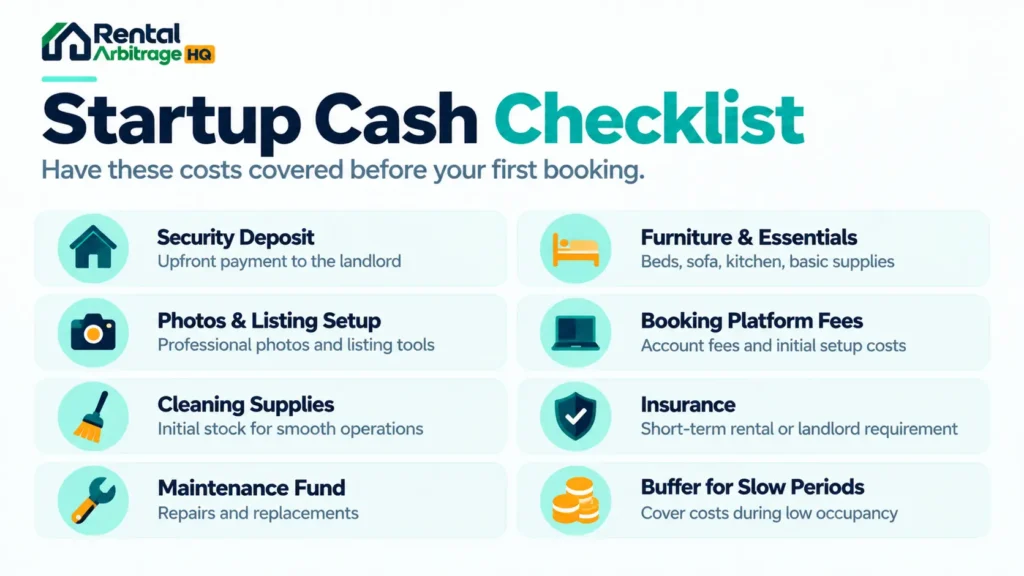
A contract cannot make an otherwise prohibited rental activity lawful. Before committing to rent, furnishing, or other startup expenses, the operator should check the lease, property restrictions, local regulations, insurance, and financial viability.
Official government guidance demonstrates why these checks matter. New York City requires hosts to review building occupancy, lease terms, and applicable city and state laws. Its rules also restrict unhosted rentals of entire apartments for fewer than 30 days. These are New York City-specific requirements, not nationwide rules. Official NYC short-term rental guidance.
Louisville Metro states that its short-term rental rules do not override lease agreements, homeowners’ association bylaws, deed restrictions, or other applicable restrictions on subletting and short-term use. Official Louisville Metro guidance.
Philadelphia provides another example of a jurisdiction with specific licensing and zoning requirements for short-term rentals. Official Philadelphia government guidance.
Pre-Signing Checklist
-
Landlord approval: Written permission covers the specific intended rental activity.
-
Existing lease: Subletting, assignment, and use clauses have been reviewed for conflicts.
-
Building restrictions: Building rules, HOA rules, and condo association requirements have been checked where applicable.
-
Local regulations: Zoning, registration, and city or state requirements have been reviewed.
-
Permits and registration: Any required short-term rental permit or business license has been identified.
-
Insurance: The insurer has confirmed coverage for the intended operation.
-
Attorney review: A qualified local attorney has reviewed the proposed lease and addendum where appropriate.
-
Financial readiness: Expected revenue, rent, operating costs, vacancy risk, and emergency reserves have been calculated.
-
Contract completeness: Payment terms, responsibilities, occupancy limits, insurance, renewal, and termination provisions are clear.
-
Signed documentation: Necessary approvals and the final signed addendum are retained.
| Check | Evidence to collect | Action if unresolved |
|---|---|---|
| Owner authorization | Signed consent or addendum | Obtain explicit written approval |
| Local legality | Official licensing and zoning guidance | Confirm requirements with the relevant authority |
| Building restrictions | Applicable bylaws, declarations, and house rules | Obtain any additional required consent |
| Insurance | Policy documents or written insurer confirmation | Resolve coverage gaps before operating |
| Financial viability | Startup budget and conservative cash-flow forecast | Rework the numbers or decline the deal |
| Legal review | Attorney comments and revised documents | Resolve material issues before signing |
Decision rule: If permission, legality, insurance, or financial viability remains uncertain, the operator should pause rather than treat this checklist as authorization to proceed.
These checks are particularly important before paying a nonrefundable deposit, purchasing furnishings, or making other substantial investments.
Conclusion About Rental Arbitrage Contract
A successful rental arbitrage business requires more than a promising property and a realistic revenue forecast. It needs transparent landlord communication, an appropriate lease structure, clear contractual permissions, and careful verification of legal and financial requirements.
A well-prepared rental arbitrage contract should explain the authorized use, rent and deposits, guest rules, insurance, maintenance, liability, and exit conditions. By using the pitch script, addendum term sheet, two tables, and pre-signing checklist in this guide, operators can identify major risks before committing funds.
The final agreement should be adapted to the property and reviewed against applicable local requirements. Clear written terms and documented approvals provide a stronger foundation for a responsible short-term rental operation.
Frequently Asked Questions
- Is an Airbnb Arbitrage Contract Different From a Standard Lease?
- The phrase describes an agreement intended to authorize Airbnb-related short-term rental activity. It may be a conventional lease with a consent addendum or another suitable arrangement. The critical issue is whether the actual terms permit the intended use.
- Is Verbal Landlord Approval Enough?
- Verbal approval can leave uncertainty about what was authorized. Written permission that identifies the intended activity is a safer approach, subject to applicable law and the underlying lease.
- Can a Landlord Withdraw Permission?
- The answer depends on the agreement, applicable law, and circumstances. The documents should address termination, breaches, and conditions attached to consent. An operator should not assume that permission can never be withdrawn.
- Does a Signed Agreement Guarantee That Rental Arbitrage Is Legal?
- No. The agreement addresses the parties' contractual relationship, but local permits, zoning, building rules, safety requirements, insurance conditions, and other regulations may apply independently.
- Should an Attorney Review the Addendum?
- A local attorney can identify conflicts with the existing lease, assess the proposed subletting provisions, and adapt the document to applicable law. Review is especially important when the lease involves a long commitment, a personal guarantee, or a substantial financial investment.